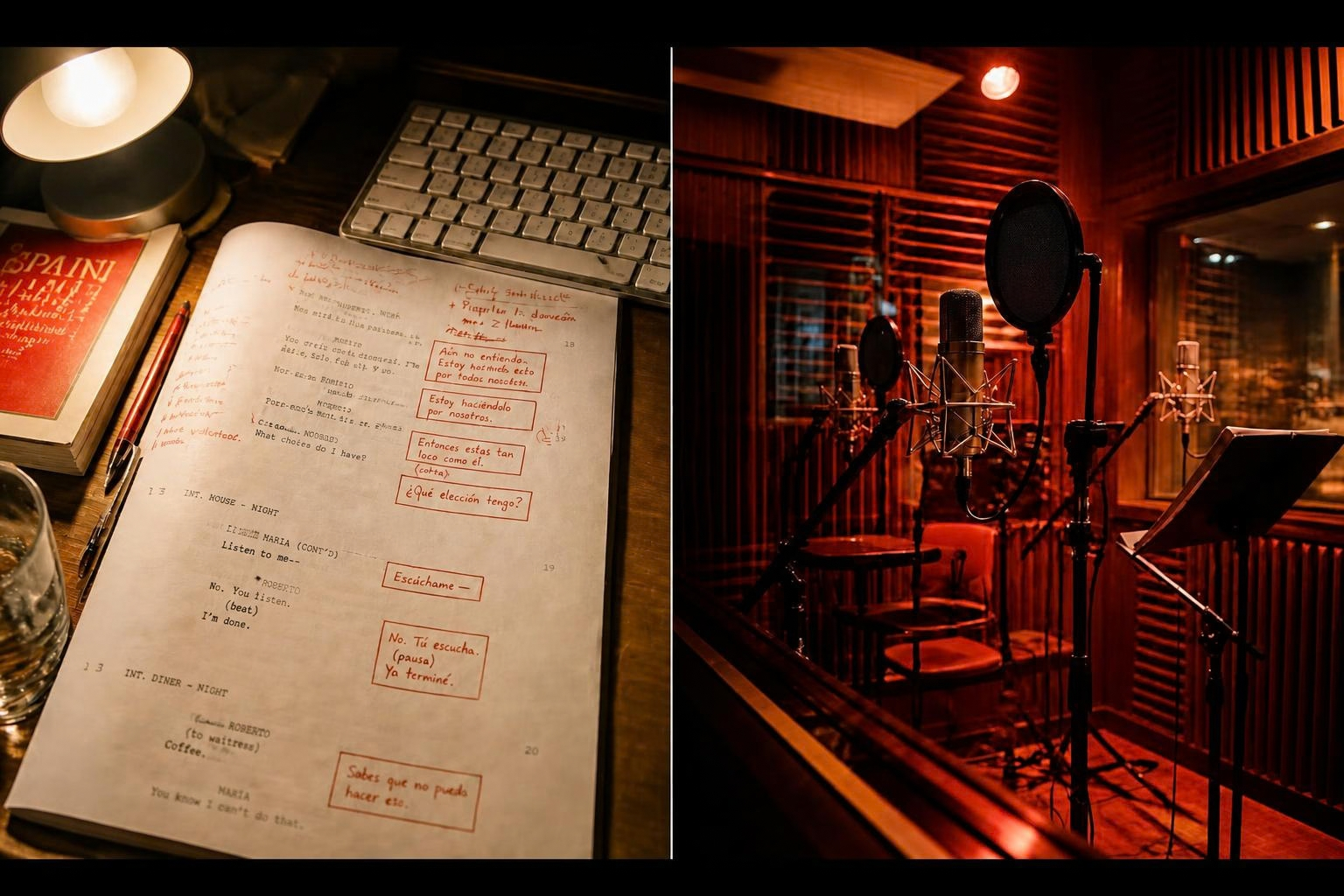
Subtitling and dubbing impact your film’s budget and timeline. Subtitling is the cheaper and faster option. While dubbing is costlier and slower, it does remove the reading barrier, and is sometimes contractually required.
Cost, however, is usually the deciding factor. Subtitling runs from roughly £9.00 for basic translation per minute but can reach up to £35.50+ per minute for distribution-grade work. In short, a 90-minute feature can cost hundreds of pounds per language. Dubbing can cost as much as £200+ per minute or £5,000–£18,000 or more per language for a feature length film. That’s because it requires casting, studio recording, mixing, and lip-sync adjustment.
AI-assisted dubbing (£2–£20 per minute) narrows this gap for lower-stakes content, but festival premieres and premium deals still expect human-performed or human-reviewed dubbing. As a rule, subtitling in multiple languages is almost always cheaper than dubbing in just one language. Most indie films lead with subtitles and reserve dubbing for commercially essential markets.
Subtitling is also quicker. It can be delivered in anywhere from days to a couple of weeks, while dubbing routinely takes several weeks once casting, studio time, and approvals are factored in. So subtitling is the realistic choice for the tight deadlines at festivals, which also almost always prefer them.
Must read: Interop ‘v’ SMPTE DCPs: What’s the difference and how much does it matter?
Streaming platforms typically require both: subtitle and closed-caption files as standard, plus dubbed audio for countries with strong dubbing cultures, all against strict technical delivery specs. The practical approach is to budget subtitling for the festival run first, then add subtitling-plus-dubbing once specific streaming or broadcast deals and the countries for screening are confirmed.
When your budget is tight, it’s best to start subtitle in French, German, Spanish and Italian, which are the core festival markets. After that, if you have the budget, add major sales-market languages such as Mandarin, Japanese, Korean, and Portuguese (Brazil).
Aim to get your film subtitled first. That will increase its exposure and the chance of getting a deal.
A phased framework of subtitles pre-festival, additional languages and captions post-sales, and dubbing only once a partner requires it, keeps early spend low while ensuring the bigger dubbing investment is commercially justified.
Unsure where to start?